


What Is Giclée Printing? The Complete Guide to Fine Art Digital Prints
Giclée printing (pronounced “zhee-clay”) is a high-quality digital printing process that uses pigment-based archival inks and professional inkjet printers to produce fine art reproductions on canvas or archival paper. The term comes from the French verb gicler (to spray), coined by printmaker Jack Duganne around 1991 to distinguish museum-grade digital prints from ordinary inkjet work — and the resulting prints are rated to last over 100 years without significant fading when displayed indoors.
What is giclée printing?
Etymology and origin
The word “giclée” derives from the French noun une giclée (“a spurt of some liquid”), related to gicler (“to spray”) and gicleur (“jet” or “nozzle”). Printmaker Jack Duganne coined the term around 1991 while working at Nash Editions, a California fine art print studio. He wanted a name that distinguished the museum-quality prints he was producing on a modified Iris 3047 inkjet printer from commercial proofs and ordinary inkjet output.
Why the term matters today
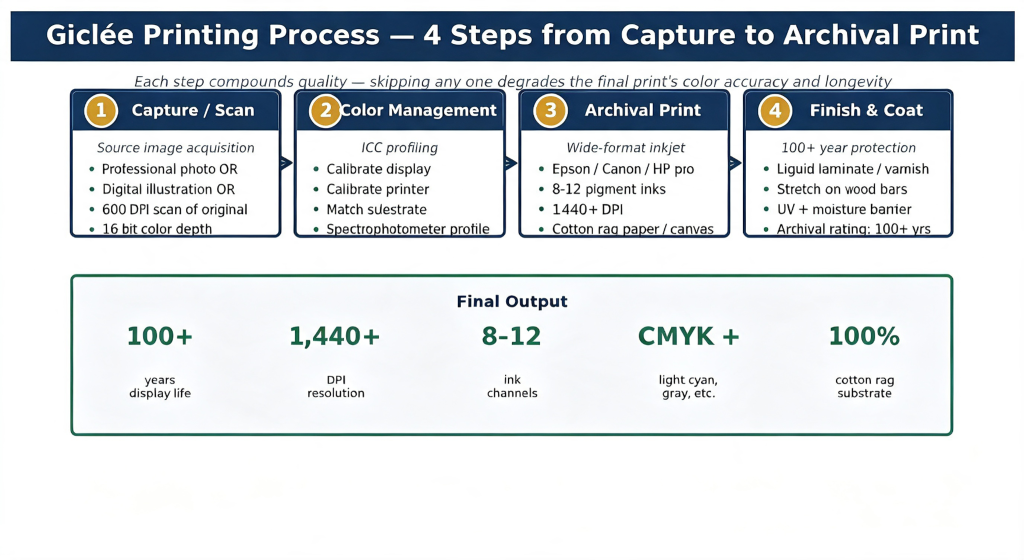
A genuine giclée today should meet three technical standards:
- At least 8 ink channels (typically 8–12 colors)
- Print resolution of 1,440 DPI or higher
- Archival-grade substrate — cotton rag paper or acid-free cotton canvas
Giclée vs regular digital print
The everyday inkjet printer at your local shop uses 4 dye-based inks (CMYK) and prints at 480–960 DPI on resin-coated photo paper. A true giclée, by contrast, uses 8–12 pigment-based inks with additional cartridges for light magenta, light cyan, and gray tones, printing at 1,440 DPI or higher on acid-free substrates.
How giclée printing works
Step 1 — Capture or scan the source image
The process begins with a high-quality digital capture: a professional photograph, a digital illustration, or a high-resolution scan of an original painting. For painted or drawn originals, the standard is 600 DPI optical resolution at 16-bit color depth to preserve subtle tonal gradations.
Step 2 — Color management and profiling
Before any ink touches paper, the image is processed through an ICC color profile that calibrates the output to match the original artwork. This involves calibrating the display, the printer, and the substrate — a misalignment in any one of these can shift colors noticeably. Professional giclée services use spectrophotometers to build custom profiles for each paper or canvas type.
Step 3 — Print on archival substrate
The image is output on a professional wide-format inkjet printer (Epson SureColor, Canon imagePROGRAF, or HP DesignJet) loaded with pigment-based archival inks. Twelve-color systems produce wider color gamuts than the standard eight, especially in deep blues and saturated reds.
Step 4 — Finishing and longevity
Depending on the substrate, the finished print may receive a coating of liquid laminate or spray varnish to protect against UV, moisture, and handling. Canvas prints are then stretched over wooden stretcher bars. According to industry testing by Wilhelm Imaging Research and archival print manufacturers like Epson, properly produced pigment-based giclée prints last 100+ years under normal indoor display conditions (450 lux, 12 hours per day).
Giclée vs other print types
The full comparison
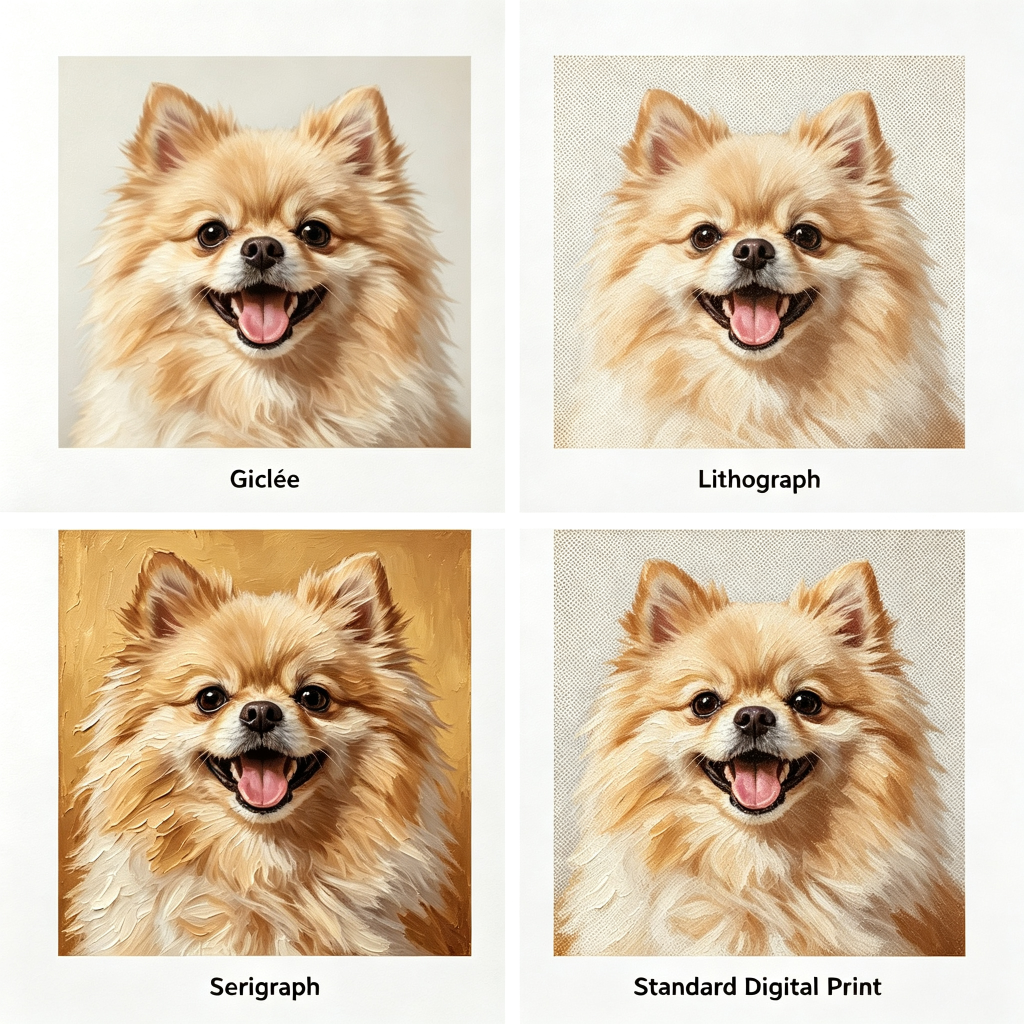
| Dimension | Giclée | Lithograph | Serigraph | Standard Digital |
| Process | High-res inkjet | Planographic offset | Hand-pulled screen | Standard inkjet |
| Ink colors | 8–12 | 4 (CMYK) | 1 per screen | 4 |
| Resolution | 1,440+ DPI | 300 lpi | n/a | 480–960 DPI |
| Display life | 100+ years | 75–100 years | 50+ years | 5–25 years |
| Single-unit cost | High | Medium | High (setup fees) | Low |
| Small-batch friendly | Yes | No | No | Yes |
| Best for | Photography, art reproduction | Posters, editions | Warhol-style art | Casual prints |
Giclée vs lithograph
Lithography is a 19th-century planographic printing technique that uses oil and water repulsion to transfer ink from a flat plate to paper. The result shows a fine dot pattern when examined closely. Giclée prints are dot-free — the image consists of continuous-tone ink droplets. Lithographs are economical for runs of 100+ identical copies; giclées are economical for one-off or limited-edition prints where each unit must be identical.
Giclée vs serigraph (silk screen)
A serigraph is made by pushing ink through a stenciled mesh screen — one screen per color. Andy Warhol’s Marilyn Monroe prints are serigraphs. Serigraphs have a tactile, slightly raised ink layer, while giclées are flat to the touch. Serigraphs require significant setup per color, making them costly for small editions; giclées have no such setup cost.
Giclée vs standard digital print
The differences come down to ink chemistry, resolution, and substrate. A standard inkjet print uses dye-based inks that fade noticeably within 5–25 years and looks visibly “pixelated” under a loupe. A giclée uses pigment inks with sub-perceptible dot patterns and is rated to outlive its owner.
Giclée on canvas vs giclée on paper
Canvas giclée — the popular choice
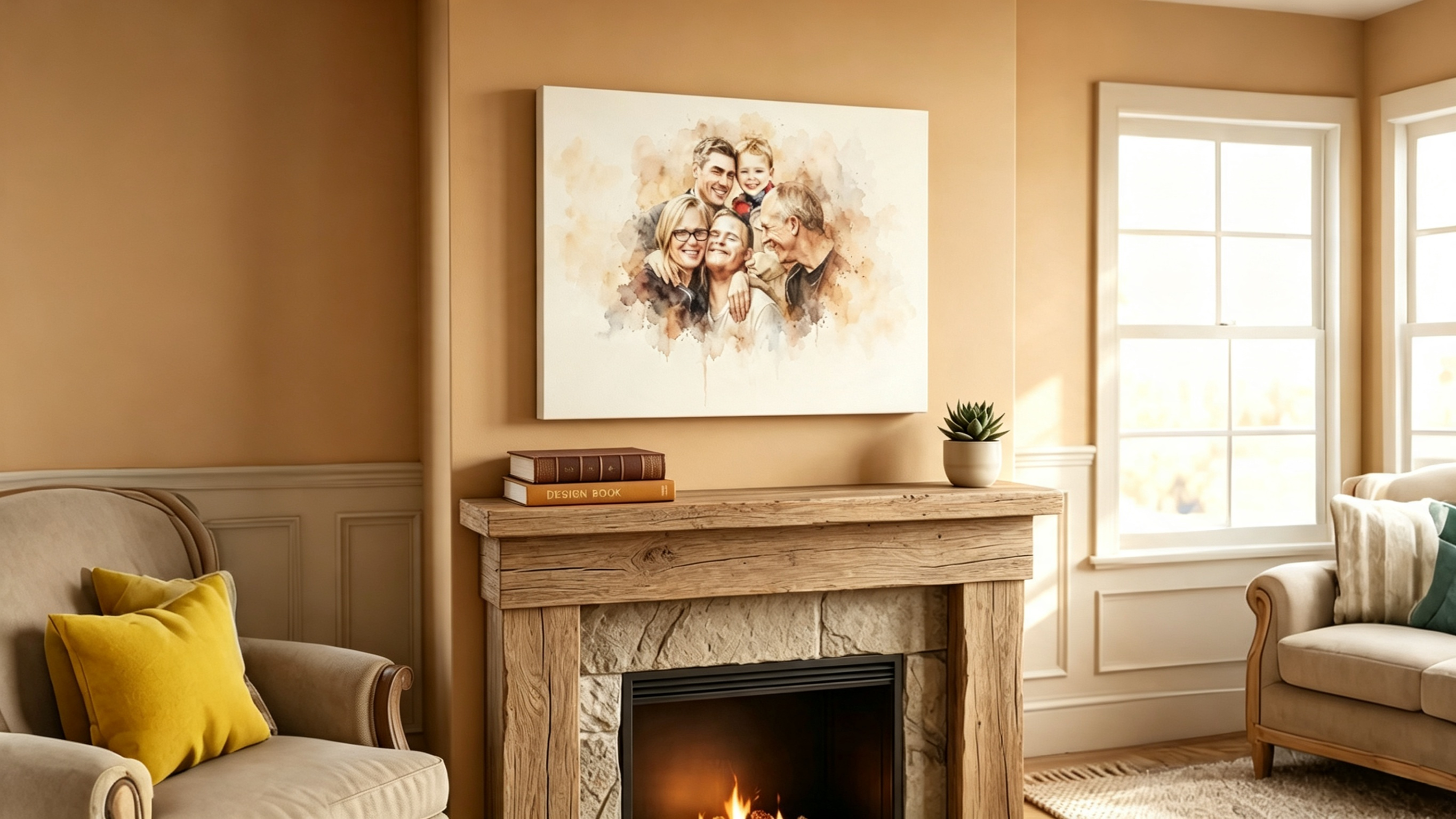
Most consumer giclée prints today are on cotton or poly-blend canvas, then stretched over a wooden frame. Canvas is forgiving of imperfect photographs — it hides small focus errors and adds texture that mimics oil paintings. It also eliminates the need for expensive framing under glass. Canvas giclées are popular for home décor, family portraits, wedding photos, and reproductions of fine art.
Paper giclée
Paper giclées use cotton rag papers from manufacturers like Hahnemühle (Photo Rag, German Etching), Canson Infinity (Edition Etching Rag), or Moab (Entrada). These 100% cotton papers are acid-free and lignin-free, which is what gives giclées their archival life. Paper prints look and feel closer to a traditional art print — flat, smooth, and refined — and are the preferred choice for limited-edition signed work.
How to choose
Choose canvas for large decorative pieces (16×20 and up) where you want texture and depth without the cost of framing. Choose paper for small, intimate prints, signed editions, or anything that will go under glass in a traditional frame.
Archival quality and longevity
What “archival” actually means
Archival print standards come from the image permanence research community, most notably Wilhelm Imaging Research, which uses accelerated xenon-arc light exposure to predict how long a print will last under typical indoor display. A “100-year” rating means the print’s colors and density will remain visually unchanged for at least a century in normal home or gallery conditions.
Factors that affect longevity
Four variables determine how long a giclée will last:
- Ink chemistry: Pigment inks last 4–10× longer than dye inks.
- Substrate: 100% cotton rag paper or canvas lasts longer than wood-pulp papers.
- Coating: Liquid laminate can double or triple display life.
- Display environment: Direct sunlight cuts longevity dramatically; UV-filtering glazing adds protection.
Giclée vs photo print longevity
A pigment-based giclée on cotton rag paper or canvas is rated 100+ years; a dye-based photo print (typical drugstore or consumer inkjet) is rated 5–25 years under the same conditions.
How much does giclée printing cost?
Actual pricing varies by service, substrate, quantity, and current promotions.
What drives the price
Four cost factors matter most:
- Substrate: Canvas costs 30–50% more than paper because of the heavier material and stretcher-bar framing.
- Size: Prices grow faster than linearly with area — a 24×36 canvas uses more than four times the ink and substrate of an 8×10.
- Quantity: Bulk discounts are common; ordering 25 pieces instead of one can cut the unit price by 50–70%.
- Extras: Framing, matting, signing, numbering, and rush turnaround each add to the base price.
When is the giclée premium worth it?
Pay the giclée premium for permanent keepsakes (wedding portraits, memorial art, family heirlooms) or for art you plan to keep on display for decades. For temporary décor or prints you might rotate out in a year or two, a standard inkjet print on photo paper is fine.
Where to print giclée: DIY vs professional services
DIY giclée at home
Home giclée printing requires a serious investment: a professional pigment-inkjet printer (Epson SureColor P900 or Canon imagePROGRAF PRO-300, $700–$2,500), archival paper or canvas ($2–$10 per square foot), and color calibration tools. Initial setup costs $1,500–$3,500, plus ongoing ink expenses. DIY makes sense only if you print 20+ pieces per month regularly.
Professional giclée services
For everyone else, professional services are the better choice. The most established names include:
- Local fine art print shops and university art centers also offer giclée services — search “[city] giclée printing” for nearby options.
- Calliegifts: Use Canon 12-colour pigment printers, artist-grade canvas, and archival-grade, fade-resistant inks that last 80+ years — true colours, rich blacks, no yellowing, museum-quality.
How to evaluate a giclée service
Before ordering, check three things:
- Ink brand: Look for Epson UltraChrome, Canon Lucia/Pigment Ink, or HP Vivera — these are industry standards for archival pigment printing.
- Substrate brand: Hahnemühle, Canson Infinity, Breathing Color, and Moab are respected archival paper/canvas makers.
- Longevity claim: Reputable services publish display-life ratings based on Wilhelm Imaging Research testing.
How to identify a real giclée print
Whether you’re buying or selling, five signals distinguish a genuine giclée from a glorified inkjet:
- Ink chemistry: Ask the printer. Real giclée uses pigment inks; dye-based prints marketed as “giclée” are mislabeled.
- Continuous tone: Examine with a loupe or magnifying glass — giclée has no visible dot pattern, only smooth gradations.
- Paper or canvas feel: Archival cotton papers have a distinctive tooth and weight; canvas has a woven texture.
- Artist signature + edition number: Limited-edition giclées typically include the artist’s signature and an edition number (e.g., “23/100”).
- Certificate of authenticity: Reputable giclée publishers include a COA listing the printer, inks, paper, and edition size.
FAQ
What is the difference between a giclée and a print?
A “print” is a generic term for any image reproduced on paper, canvas, or other surface — it could be a lithograph, serigraph, inkjet, or giclée. A giclée specifically refers to a high-resolution digital print made with 8+ pigment inks on archival substrate, designed to last 100+ years.
Are giclée prints worth anything?
Limited-edition giclées signed and numbered by the artist can sell for hundreds to thousands of dollars, especially when produced on premium archival substrates by a recognized print studio. Unsigned open-edition giclées are worth the cost of materials and printing but rarely appreciate in value.
Why is giclée so expensive?
Three factors drive the price: specialized hardware (wide-format pigment inkjet printers cost $5,000–$30,000), expensive pigment inks ($100–$300 per cartridge set), and archival substrates (cotton rag paper and acid-free canvas cost 5–10× more than standard photo paper).
How much does giclée printing cost?
Typical US prices in 2026 range from $15–30 for a single 8×10 paper print to $140–280 for a 30×40 canvas. Bulk orders reduce per-unit cost significantly — 25 pieces at once can halve the per-unit price.
How long do giclée prints typically last?
Properly produced pigment-based giclées on archival substrates are rated for 100+ years under normal indoor display conditions. Wilhelm Imaging Research and major ink manufacturers (Epson, Canon) publish specific ratings for each ink/paper combination.
Do you put glass over a giclée print?
Paper giclées benefit from UV-filtering glass or acrylic glazing — it dramatically extends life and protects against handling damage. Canvas giclées should never be glazed; the canvas needs to breathe, and glass traps moisture that can cause mold or warping.
How can you tell if a print is a giclée?
Look for continuous tone (no visible dot pattern) under magnification, ask about ink chemistry (pigment vs. dye), and check for a certificate of authenticity listing the printer, inks, and substrate.
What is the highest quality art print?
For color photography and continuous-tone reproductions, giclée on archival cotton paper or canvas is the highest quality available outside traditional darkroom prints. For bold graphic art and screen prints, serigraphs are considered the premium standard.